



01When to use the driver job description, and who uses it
An administration officer writes this description when the company needs someone to move its staff, guests or managers, or to run its daily errands between the office, the bank and government offices. HR uses it in the contract and the vehicle custody acknowledgment, and the officer refers to it when planning the week, to know what is and is not part of the driver's job.
It is reopened when the vehicle changes from a car to a bus carrying workers, changing the licence and checks; when the driver is assigned to one manager instead of the whole company; or when trips extend to other cities, bringing in travel and overnight allowances.
02The driver job description
The template groups the driver's work under 5 headings, Passengers and errands, Safe driving, The vehicle and its upkeep, Logs and papers and Conduct at work, followed by how the job is measured, who suits it and where it is done.
[Company name]
Job Description

Job title: Driver
Department: Support Services / Administration
Reports to: Administration Officer
Work location: [head office] and the set routes
Work pattern: [full-time / by the work-period schedule]
Issue date: [date]      Version: [number]

Job summary
The driver carries passengers, managers or internal errands for the company safely and on time, looks after the vehicle, its cleanliness and papers, and records the trips.

Duties and responsibilities
1) Passengers and errands
   - Carry staff or managers by the approved schedule and routes.
   - Run administrative errands such as collecting or delivering mail to offices.
   - Keep to departure and arrival times and tell the supervisor of any delay.
2) Safe driving
   - Follow traffic rules and speed limits and wear the seat belt.
   - Never use the mobile phone while driving.
   - Never carry passengers or items that are not authorized.
3) The vehicle and its upkeep
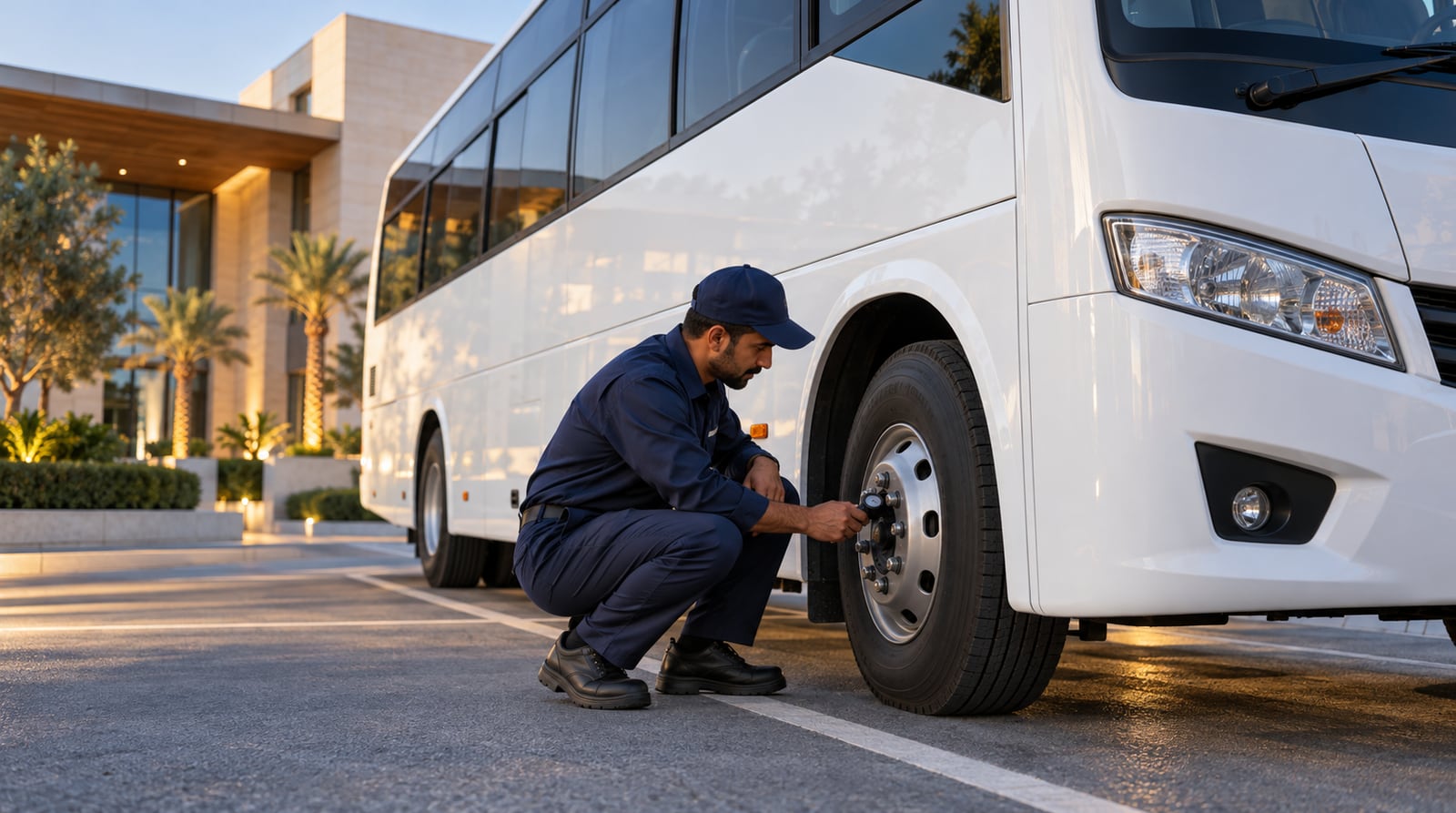
   - Check the vehicle daily before leaving: tyres, oil, lights and brakes.
   - Report faults and the regular service date to the person in charge.
   - Keep the vehicle clean inside and out.
4) Logs and papers
   - Record odometer, fuel and trip times in the vehicle log.
   - Make sure the registration card and insurance are valid and renewed before expiry.
   - Hand fuel and maintenance receipts to finance.
5) Conduct at work
   - Treat passengers politely and keep what is heard private.
   - Report any accident at once and give the details to the manager.

Suggested performance indicators
- Keeping to trip times.
- A clean record of traffic fines on the vehicle during the period of custody.
- Regular daily checks and trip log.
- Condition and cleanliness of the vehicle.
- Speed in reporting faults and accidents.

Qualifications and experience
- Primary school or above, or what the company sets.
- A valid driving license of the right class for the vehicle.
- At least [__] years driving [if required].

Skills required
- Safe, defensive driving.
- Knowing the roads and the city.
- Honesty and punctuality.
- Basic vehicle checking.
- Courtesy with passengers.

Working conditions
- Work location: [city], constantly on the road.
- Work pattern: [full-time], which may stretch with the trip schedule.
- Vehicle: [company vehicle], handed over under a custody acknowledgment.

Approval
[Approver name and job title]      Signature: ________      Date: [date]

Job holder acknowledgment
I have read the driver description above and confirm I understand its duties.
Name: [employee name]      Signature: ________      Date: [date]
03The driver description, clause by clause
Passengers and errands: a schedule, not an open call
The clause refers to the weekly trip schedule and to who may request the driver. A driver whom anyone can call at any time is late for the manager's trip that was planned, and the working day becomes open-ended waiting.
Safe driving: rules before speed
Keeping to traffic rules, wearing seat belts and not using the phone while driving are written down because the driver carries colleagues' lives. The driver refuses to drive when exhausted after long hours, and reports it.
Vehicle and maintenance: a daily check and a log
Checking tyres, oil and lights before leaving, recording scheduled servicing and telling the officer when it is due. The driver does not repair the vehicle except for simple, permitted tasks.
Records and papers: registration and insurance on board
The driver carries the licence, vehicle registration and insurance document, and reports before any of them expires. A trip log with date and distance shows how the vehicle is used and settles questions about fuel.
Conduct and qualifications
Proper appearance, courtesy with passengers and discretion about what is heard inside the vehicle. The qualification is a valid licence for the vehicle type and knowledge of the city's roads; a clean traffic record is an advantage.
Approval and signature
The driver description does not take effect until the approver signs and dates it, and the version number tells the current copy from the last one at every change.
04Interview questions that test the driver description
- 01Two managers ask for you at the same time. What do you do? Goes back to the schedule and whoever holds priority, gives the other an alternative time, and does not decide by seniority on their own.
- 02What do you check on the vehicle every morning? Tyres, fuel, oil, lights and a clean cabin, and logs it.
- 03A passenger tells you to speed up because they are late. What do you say? Politely declines and keeps to the legal speed, reporting it if the request repeats.
05A filled-in example: a staff bus driver for a company in Jubail
An industrial company in Jubail hires a non-Saudi bus driver reporting to the administration officer; the company provides housing and the bus, so there is no transport allowance. It wrote that the driver takes morning-shift staff to and from the plant and then runs mail errands, that the driver holds a bus licence, and estimated thirty hours of overtime a month when production periods run long.
| Field | In the example |
|---|---|
| Company | An industrial company moving staff between housing and the plant |
| City | Jubail |
| Work period | 5:30 am to 1:30 pm |
| Start date | 2026-12-08 |
| Nationality | Non-Saudi |
| Basic salary | SAR 3,000.00 |
| Housing allowance | SAR 750.00 |
| Transport allowance | SAR 0.00 |
| Total monthly salary | SAR 3,750.00 |
These inputs give the following driver figures, worked out with the same functions as the GOSI calculator, the end-of-service calculator, the leave calculator and the overtime calculator on our site:
| Calculation | Result | Basis |
|---|---|---|
| End of probation (90 days) | 2027-03-07 | the start date counts as day one |
| Actual hourly wage | SAR 15.63 | (basic + allowances) ÷ 30 ÷ 8 hours |
| Overtime hourly rate | SAR 21.88 | actual hourly wage + 50% of the basic hourly wage |
| Pay for 30 overtime hours | SAR 656.25 | overtime rate × hours |
| Employee GOSI share per month | SAR 0.00 | nothing is deducted from a non-Saudi employee |
| Employer GOSI share per month | SAR 75.00 | 2% of the contributory wage |
| End-of-service award if the contract ends at term after two years | SAR 3,750.00 | half a month's wage per year for the first five years, on the total of SAR 3,750.00 to 2028-12-07 |
| Annual leave earned by the end of probation | 5.18 days | 21 days per year of service, pro rata |
06Hard cases and common mistakes in a driver description
A traffic fine is recorded against the vehicle
The trip log shows who was driving, and who bears the fine follows the contract and the company's regulation. That is why the description makes the trip log compulsory.
A breakdown with passengers on board
The driver stops somewhere safe, tells the officer so a replacement is sent, and keeps passengers informed rather than leaving them waiting. The procedure is written in the transport guide.
An employee asks for a personal errand
Personal errands are not part of the driver's job without permission from whoever can give it. The driver passes the request on without a curt refusal.
A trip that ends after hours
Hours after the working day at the company's request are overtime, so write in the description who may assign them; how they are calculated is shown in the example below.
Common mistake: A driver with no written schedule
“As the work requires” on its own makes the working day limitless and overtime unprovable.
Common mistake: Treating the driver as a delivery driver
Handing goods to customers and proving it is the delivery driver's job, with other indicators.
07Steps to adapt the driver description to your company
- 1
State the vehicle type
a car, a bus or a small truck, since the license and the checks differ.
- 2
Write the real schedule
who the driver carries and at what times, so flexibility does not become open-ended hours.
- 3
Tie it to the custody acknowledgment
make clear the vehicle and its papers are in the driver custody and what the driver answers for.
- 4
Point to the fines policy
who bears a traffic fine under your written policy.
08Driver description checklist before approval
6 items
09Frequently asked questions
A driver carries people and administrative errands, while a delivery driver carries goods to customers, collects proof of delivery and handles returns.
Ask for a valid driving license that suits the vehicle the person will drive, and nothing beyond that.
Your company policy and the employment contract decide it, so refer to them and keep the ruling out of the description.
Say so plainly if so, and set out what the company covers for fuel and upkeep under its policy.
That follows the company's business travel policy. Write in the description that out-of-town trips fall under the business travel policy.
Keeping the cabin clean is usually part of the job, while outside washing is for the company to decide; write it if you want it.
If the company needs it, by assignment and as the Labor Law provides; the weekly rest day is a right the description cannot remove.