



Required Saudization rates in Nitaqat 2026 by activity
The 41 economic activities in Annex 1 of the 2026 procedural guide for the developed Nitaqat program, grouped into eight groups for browsing. Each activity has a page with its thresholds for every size and year, a worked example and its hard cases.
Agriculture, mining, energy and manufacturing
At 100 employees in 2026, the Low Green threshold in this group ranges from 5.25% in Agriculture and livestock to 28.55% in Hydrocarbons, and Platinum from 17.05% in Agriculture and livestock to 52.63% in Non-metallic mining.
 Low Green 5.25%
Agriculture and livestock
Agricultural and livestock production, related services and equestrian clubs
الإنتاج الزراعي والحيواني وخدماتها وأندية الفروسيةActivity page Low Green 28.55%
Hydrocarbons
Hydrocarbon activities and operations
أنشطة الهيدروكربونات وعملياتهاActivity page Low Green 23.74%
Metal ore mining
Mining of metal ores and precious stones
تعدين المعادن الفلزية والأحجار الكريمةActivity page Low Green 25.74%
Non-metallic mining
Mining of non-metallic and industrial minerals
تعدين المعادن غير الفلزية والصناعيةActivity page Low Green 7.00%
Building materials mining
Mining of building materials
تعدين مواد البناءActivity page Low Green 14.58%
Energy and water
Energy, water and related services
الطاقة والمياه وخدماتهاActivity page Low Green 22.82%
Manufacturing
Manufacturing industries
الصناعاتActivity page
Contracting, operations and site services
At 100 employees in 2026, the Low Green threshold in this group ranges from 10.47% in Cleaning and laundry to 76.07% in Security and recruitment, and Platinum from 22.00% in Cleaning and laundry to 86.07% in Security and recruitment.
 Low Green 12.47%
Construction contracting
Building and construction contracting
مقاولات التشييد والبناءActivity page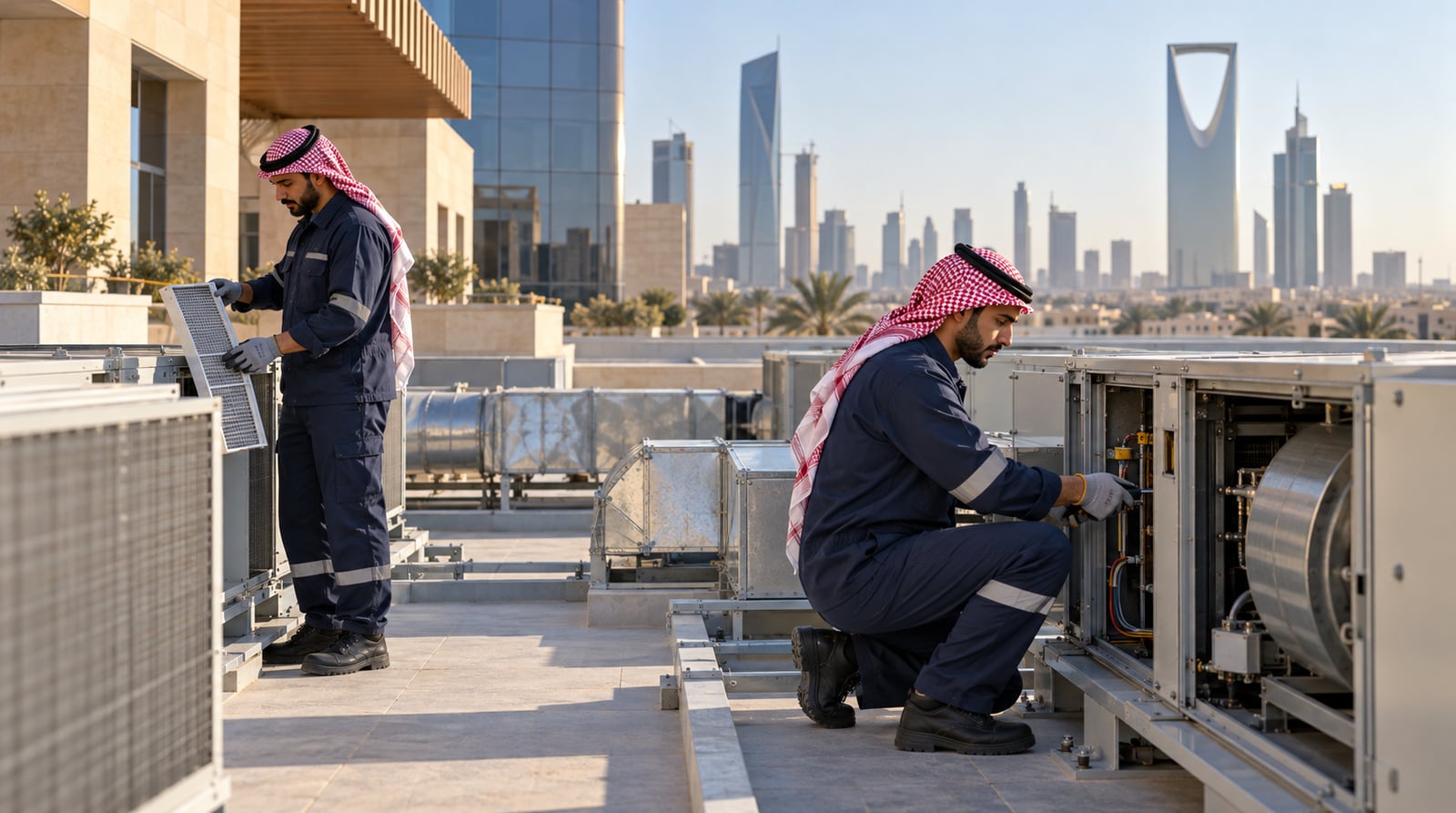 Low Green 17.76%
Operation and maintenance
التشغيل والصيانةActivity page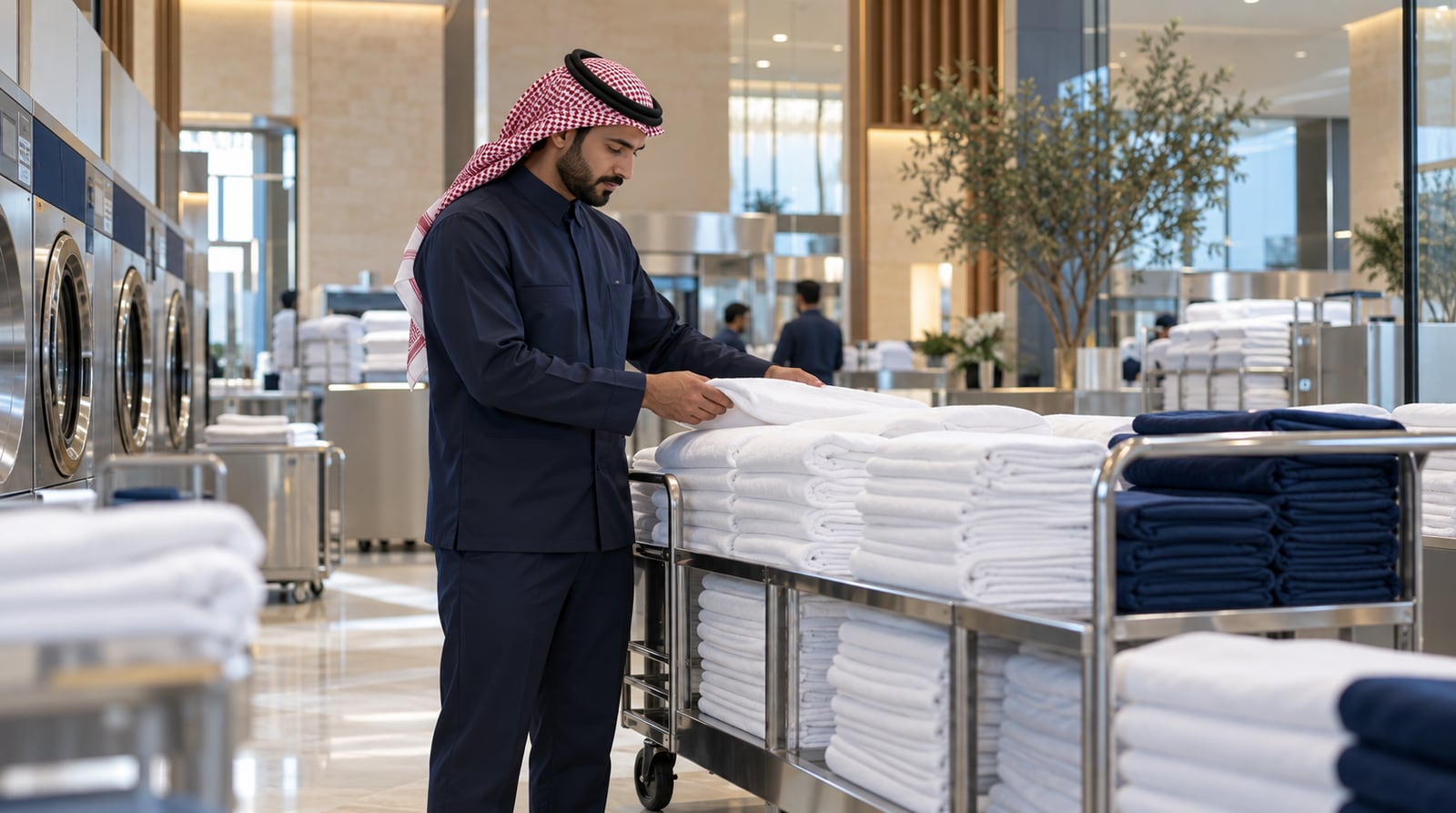 Low Green 10.47%
Cleaning and laundry
Cleaning and laundry contracting
مقاولات النظافة والمغاسلActivity page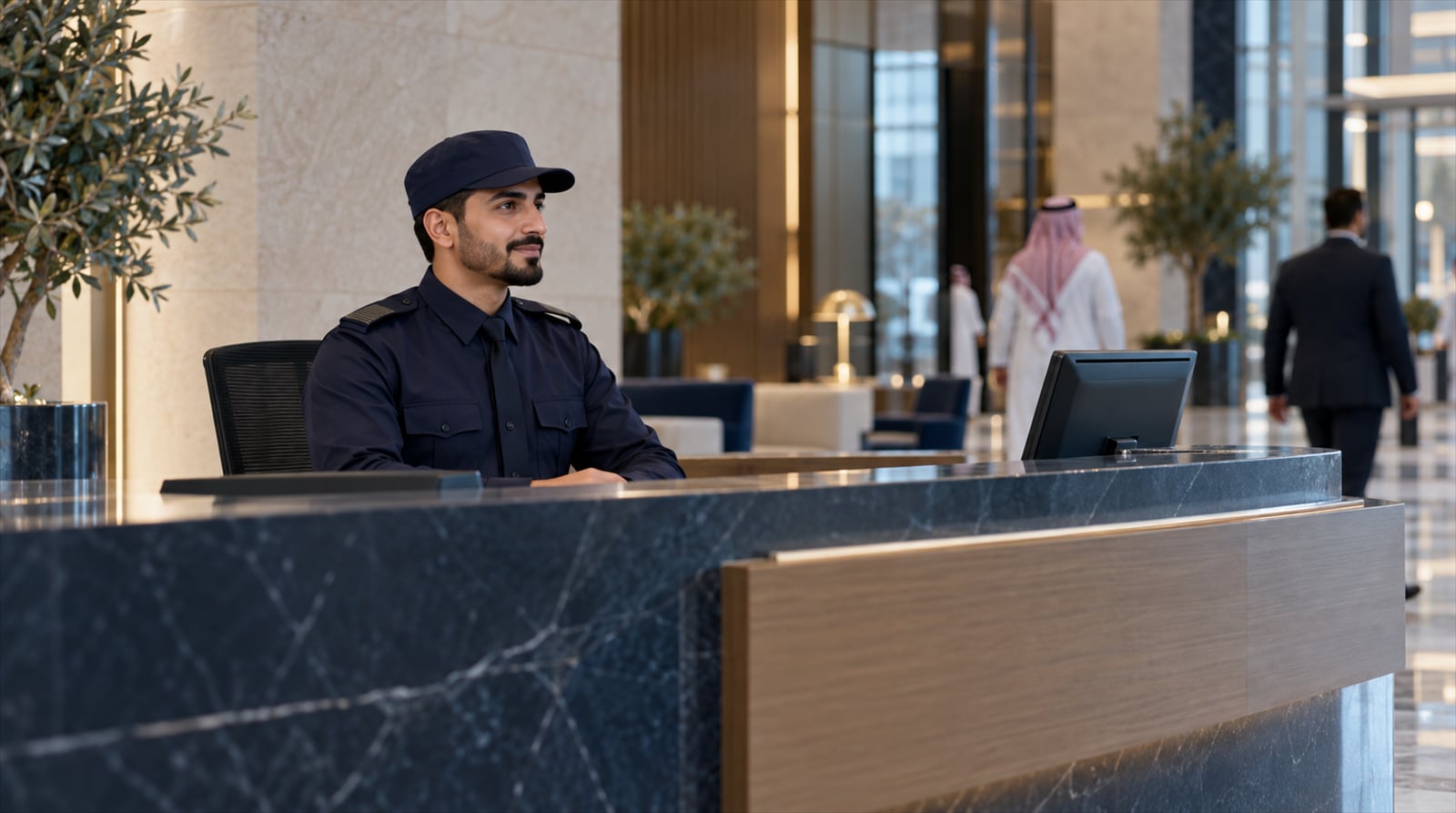 Low Green 76.07%
Security and recruitment
Security guarding and private recruitment offices
حراسات أمنية ومكاتب التوظيف الأهليةActivity page
Trade and retail
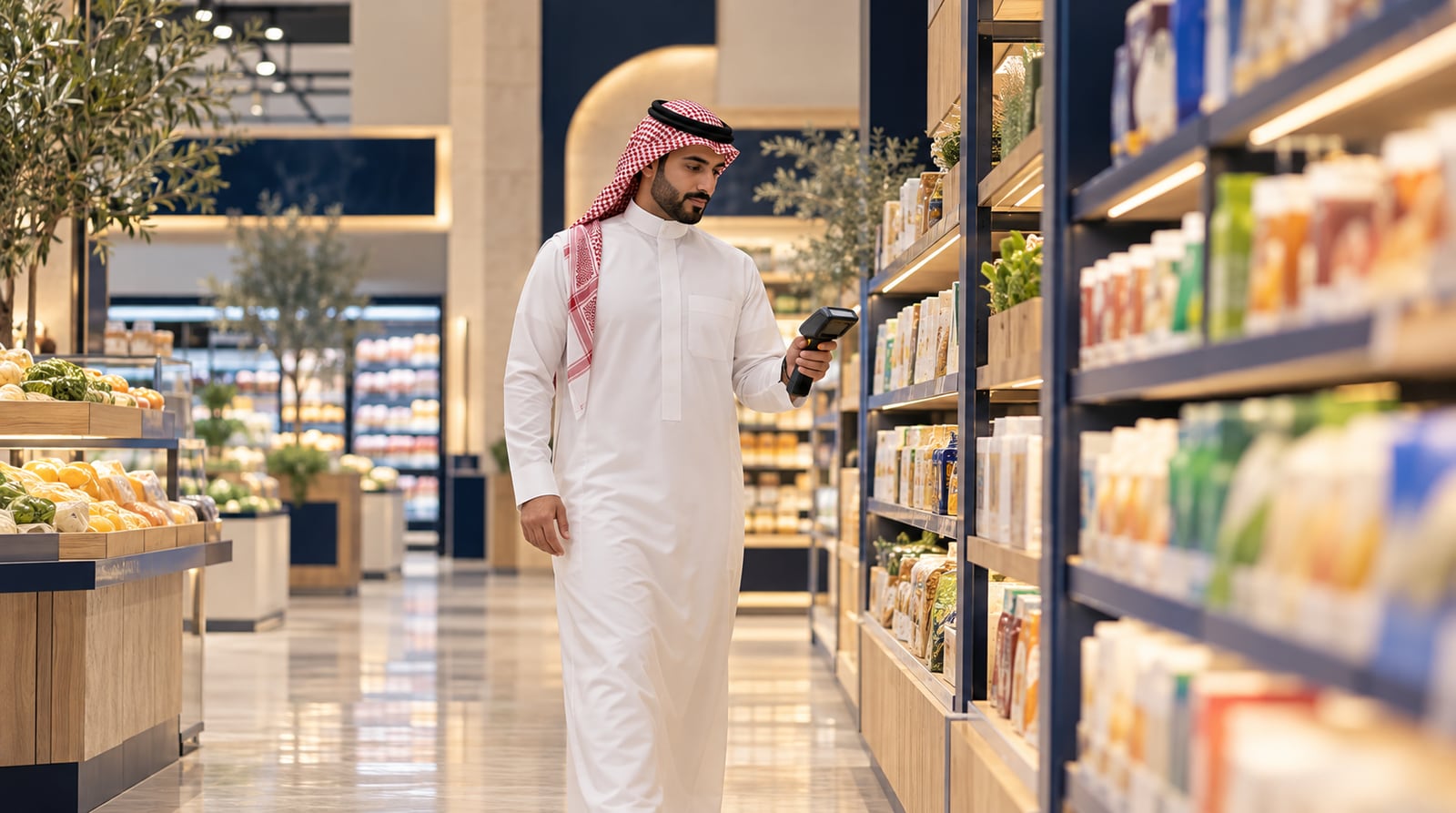
At 100 employees in 2026, the Low Green threshold in this group ranges from 10.64% in Essential goods and fuel to 82.00% in Women's goods and mobiles, and Platinum from 31.57% in Essential goods and fuel to 94.66% in Women's goods and mobiles.
 Low Green 34.62%
Wholesale and general retail
General wholesale and retail
البيع بالجملة والتجزئة العامةActivity page Low Green 36.62%
Perfume and watch retail
البيع بالتجزئة للعطور والساعاتActivity page Low Green 35.62%
Fashion retail
Fashion, accessories and miscellaneous goods retail
البيع بالتجزئة للأزياء، والكماليات والسلع المتنوعةActivity page Low Green 82.00%
Women's goods and mobiles
Women's goods, and mobile phone sales and repair
السلع النسائية، بيع الهواتف المحمولة وصيانتهاActivity page Low Green 10.64%
Essential goods and fuel
السلع الأساسية والمحروقاتActivity page
Telecom and IT
At 100 employees in 2026, the Low Green threshold in this group ranges from 17.00% in Telecom infrastructure to 38.30% in IT O&M, and Platinum from 28.50% in Telecom infrastructure to 66.62% in IT infrastructure.
 Low Green 37.85%
Telecom solutions
حلول الاتصالاتActivity page Low Green 34.39%
IT infrastructure
البنية التحتية لتقنية المعلوماتActivity page Low Green 17.00%
Telecom infrastructure
البنية التحتية للاتصالاتActivity page Low Green 17.00%
Telecom O&M
Telecom operation and maintenance
التشغيل والصيانة للاتصالاتActivity page Low Green 38.30%
IT O&M
IT operation and maintenance
التشغيل والصيانة لتقنية المعلوماتActivity page Low Green 36.85%
IT solutions
حلول تقنية المعلوماتActivity page
Transport and postal
At 100 employees in 2026, the Low Green threshold in this group ranges from 17.39% in Land transport and warehousing to 33.25% in Sea and air transport, and Platinum from 35.61% in Land transport and warehousing to 68.59% in Sea and air transport.



Food, accommodation and tourism
At 100 employees in 2026, the Low Green threshold in this group ranges from 20.75% in Full-service restaurants to 35.74% in Accommodation and tourism, and Platinum from 34.40% in Full-service restaurants to 54.45% in Accommodation and tourism.
 Low Green 20.75%
Full-service restaurants
Full-service restaurants (excluding fast food)
مطاعم مع الخدمة لا تشمل مطاعم الوجبات السريعةActivity page Low Green 22.36%
Fast-food restaurants
Fast-food restaurants and ice-cream shops
مطاعم خدمة سريعة ومحلات الآيسكريمActivity page Low Green 24.26%
Cafes and beverage shops
المقاهي ومحلات تقديم المشروباتActivity page Low Green 21.74%
Catering
Catering and food supply
التموين والإعاشةActivity page Low Green 35.74%
Accommodation and tourism
Accommodation, entertainment and tourism
الإيواء والترفيه والسياحةActivity page
Finance, business and services
At 100 employees in 2026, the Low Green threshold in this group ranges from 20.79% in Personal services to 61.97% in Financial institutions, and Platinum from 49.16% in Personal services to 76.97% in Financial institutions.
 Low Green 61.97%
Financial institutions
المؤسسات الماليةActivity page Low Green 38.52%
Business services
خدمات الأعمالActivity page Low Green 23.25%
Social services
الخدمات الاجتماعيةActivity page Low Green 20.79%
Personal services
الخدمات الشخصيةActivity page Low Green 21.26%
Consolidated entities
الكيانات المجمعةActivity page
Education and health
At 100 employees in 2026, the Low Green threshold in this group ranges from 15.54% in Foreign schools to 51.00% in Girls' schools, and Platinum from 36.35% in Labs and health services to 95.00% in Girls' schools.
 Low Green 34.00%
Higher education
التعليم العاليActivity page Low Green 25.00%
Health higher education
Higher education in health specialties
التعليم العالي للتخصصات الصحيةActivity page Low Green 51.00%
Girls' schools
Girls' schools, kindergartens and nurseries
مدارس البنات ورياض الأطفال والحضاناتActivity page Low Green 15.54%
Foreign schools
المدارس الأجنبيةActivity page Low Green 27.35%
Labs and health services
Laboratories and health services
المختبرات والخدمات الصحيةActivity page Low Green 35.33%
Boys' schools
Boys' schools and boys' and girls' complexes
مدارس البنين ومجمعات البنين والبناتActivity page
What does each band mean for your company?
- Platinum, High Green and Medium Green: visa balance requests for available occupations, changing expatriate occupations to available ones, work permit renewal regardless of iqama duration provided no more than six months remain at renewal, transfer of expatriate services from any band subject to the service rules, and instant recalculation in Nitaqat.
- Low Green: new visa requests and occupation-change requests are suspended, while work permit renewal continues under the same condition, with instant recalculation.
- Red: no changing of expatriate occupations, no transfer of their services to the company, no new visa requests, and no issuing or renewing of work permits.
How is the minimum rate for each band calculated?
The guide sets each band's minimum with the equation y = m × ln(x) + c, where y is the band's minimum rate, x the entity's total headcount, ln the natural logarithm, and m and c fixed coefficients per activity, band and year. The Saudization rate = sum of average Saudi headcount across the entity's establishments ÷ (sum of average Saudi headcount + sum of average expatriate headcount) × 100, and a rate equal to a threshold enters the higher band.
Before you read your activity page
Because total headcount sits inside the logarithm: with a positive curve constant the threshold rises with size at a slowing pace, with zero it stays fixed, and in only two rows (building and construction contracting, and cleaning and laundry contracting) the two lowest thresholds dip slightly.
In some activities, yes: the constant c changes by year in Annex 1, while in others it stays the same. Each activity page has the three-year table or states that it is fixed.
No. The guide defines expatriate labour as workers who are not nationals of the Gulf Cooperation Council states. How a GCC national is counted on the Saudi side is not stated in the guide's pages.
Enter your activity and your Saudi and expatriate headcount in the Nitaqat calculator, which shows the band, each band's minimum and the Saudis needed for the next band. The official band is what the ministry's platforms show for your entity.
Follow your workforce mix in TAC HR
In TAC HR the "Saudization impact" card in Hiring analytics shows the share of Saudis among your employees and what it becomes with the next hire, and with integration with Muqeem and GOSI the nationality data stays in each employee's profile.
- Recruitment — A recruitment system that ranks applicants with written reasons and turns the accepted one into an employee file
- Document archiving — Employee and company document archiving with expiry dates and a reminder before every renewal
- Payroll — Saudi payroll software that computes every line with its formula and produces a detailed wage file after a readiness check